SPOTLIGHT
The problem
Who’s on the project? Are we still on budget? Fairly reasonable questions. Answering them meant consulting a staffing spreadsheet, a finance export hiding somewhere in Google Suite, and whoever happened to remember.
By the time finance closed the month, the work had already happened. Finding out you were in trouble then wasn’t particularly useful.

What I built
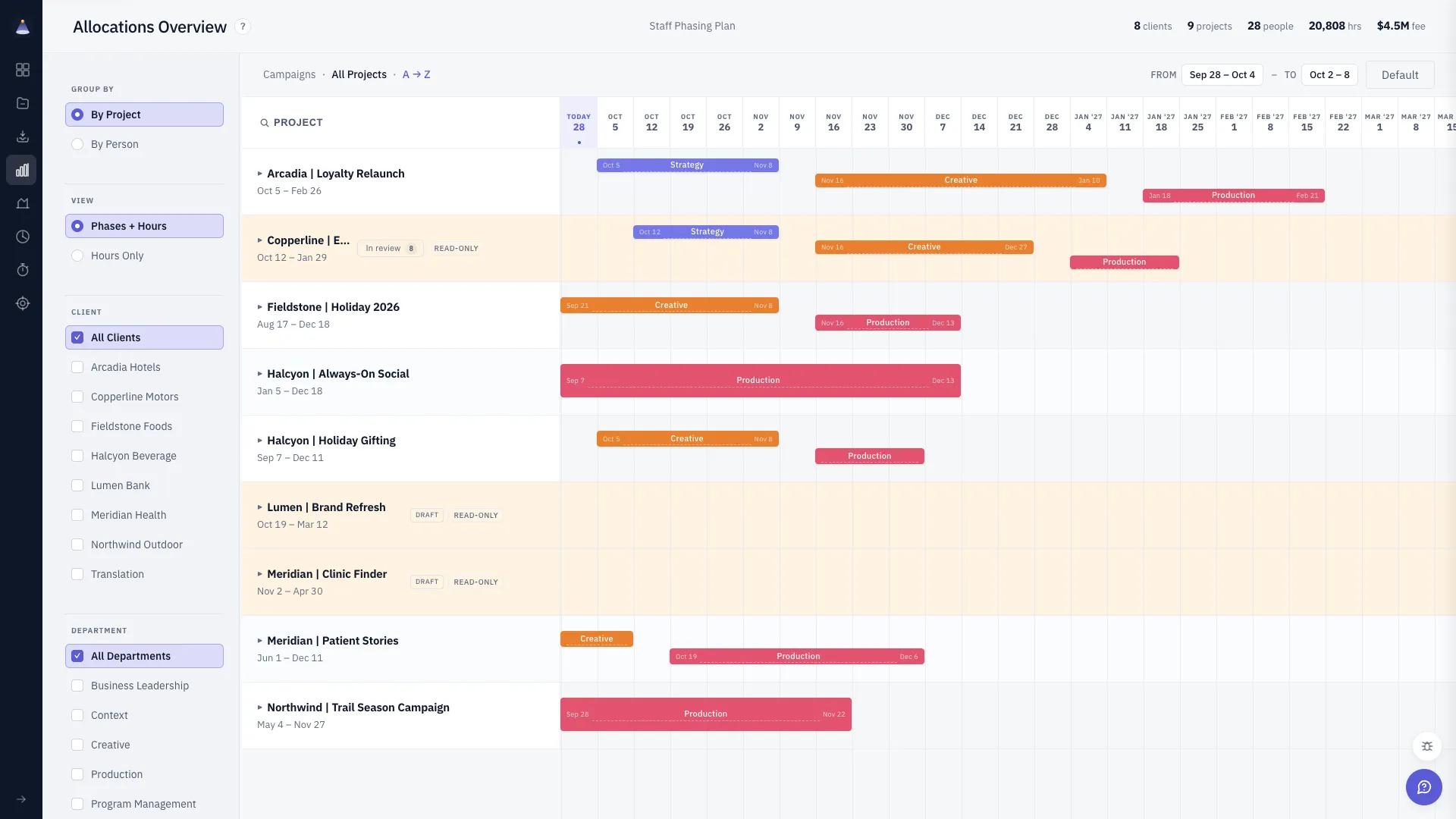
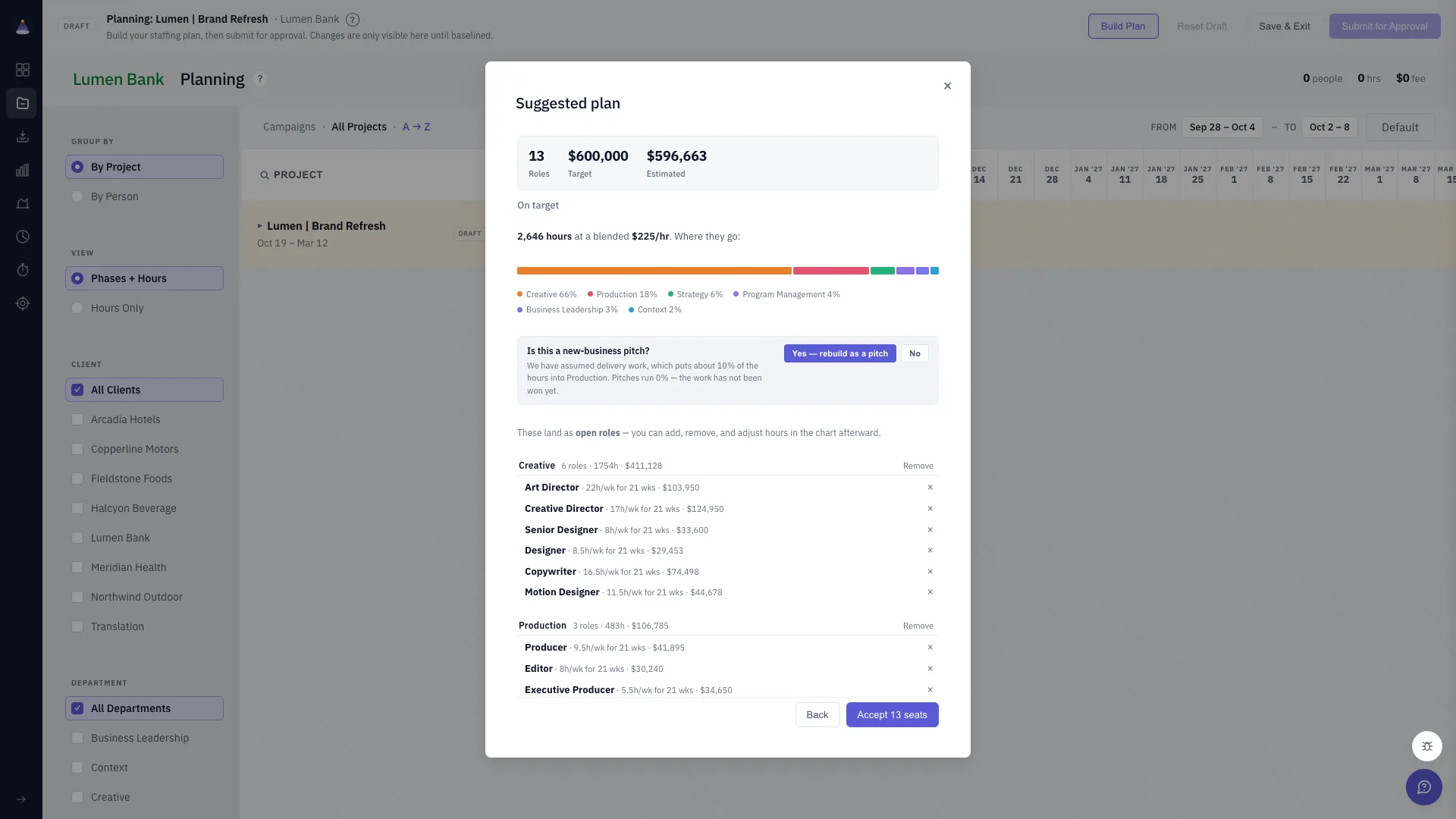
I built Spotlight to put the project in one place, from the moment it’s sold. Give it a brief and it suggests a team, with the roles, hours and cost laid out against the fee. It then finds people with the right skills and room in their calendars.
The plan goes through approval. After that, staffing, timesheets and the budget follow the same project. You can see the gaps, the hours being used and where the job is heading while there’s still time to act.
How it works
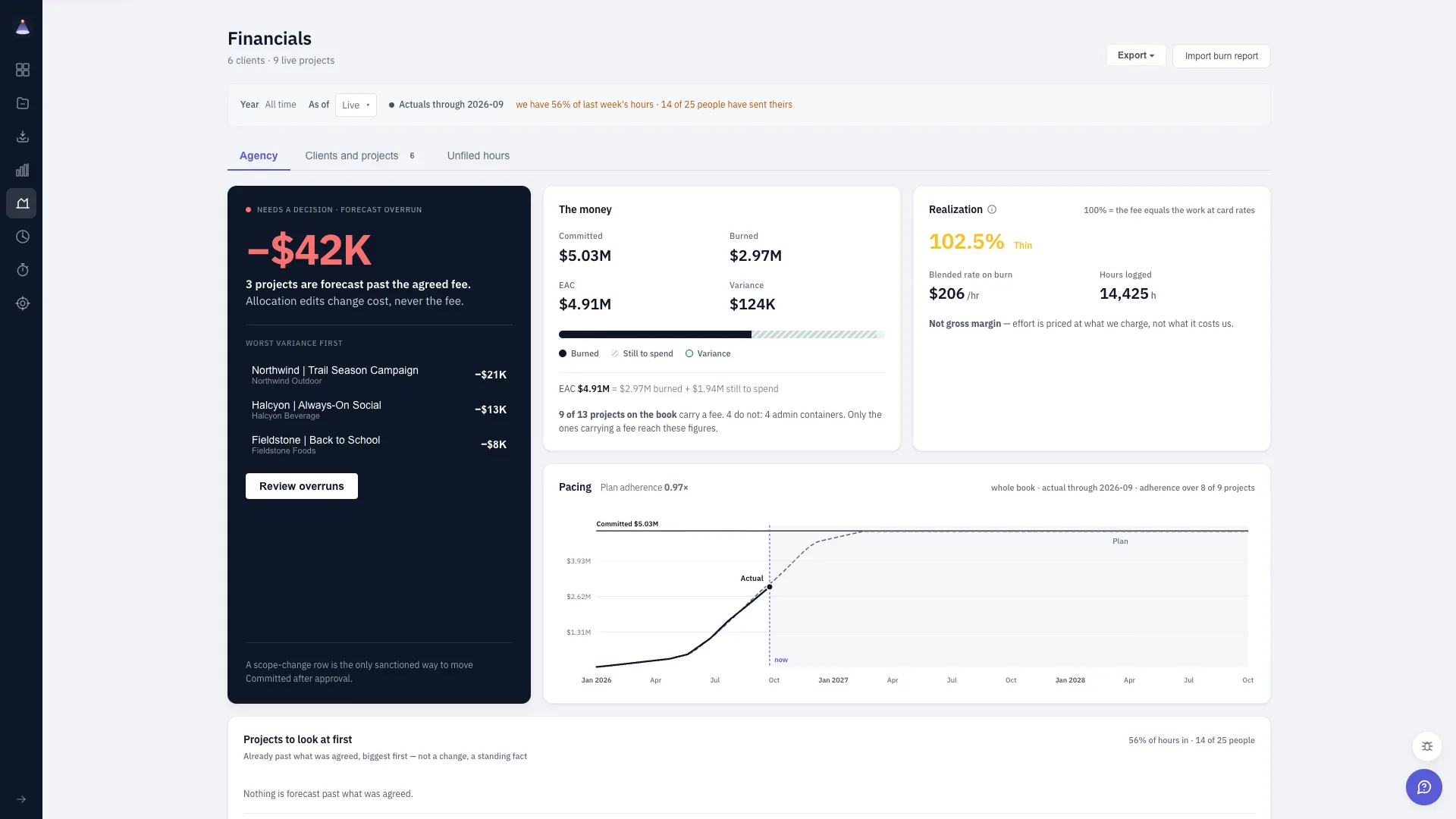
Spotlight keeps asking a slightly more useful question than “what have we spent?”: “What will this job cost by the time we’re done?” It combines the actual cost so far with the work still planned, and compares that forecast with the fee.
There’s also a Just-in-Time™ early read, before everyone has submitted and approved their hours. Logged time and timesheet suggestions are compared with the plan to flag jobs that may be running ahead. It shows how much is still a guess, and whether enough of the team is visible to call it. Those estimates stay separate from the approved financial numbers.
If anything is looking off, you’ll get a warning while you can still do something about it. And in the end, you get a proper account when all the hours are confirmed.
What it changed
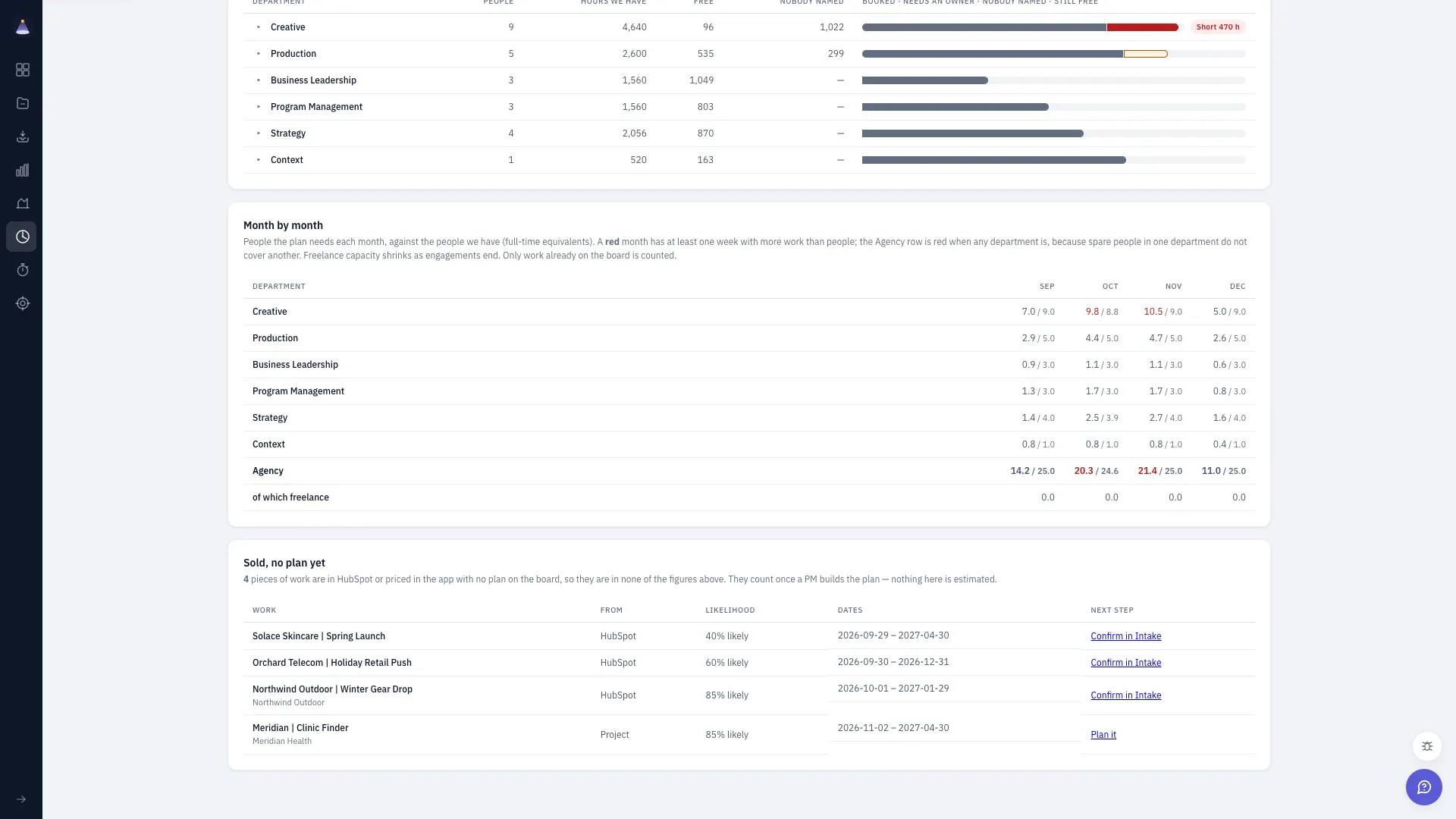
The spreadsheet has been retired. Leadership can see every project together, with staffing gaps ahead and a forecast of where the budget is going.
The point is fairly simple: see every project, act in time.